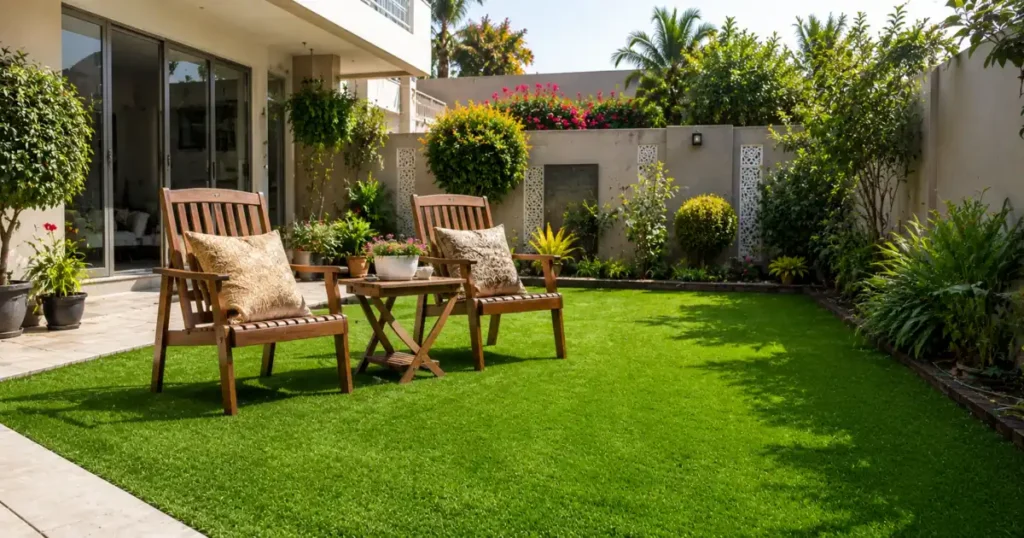
Artificial grass is a practical alternative to natural lawns that remains green throughout the year without requiring regular watering, mowing, or chemical treatments. This flooring solution provides a clean surface for residential yards, commercial properties, and play areas where growing real grass is difficult or expensive. By understanding how synthetic turf is constructed and maintained, you can decide if artificial grass is the right option for your floor transformation requirements.
What is artificial grass and how it works?
Artificial grass consists of durable synthetic blades stitched onto a solid backing material to mimic the look of natural grass. Manufacturers use polymers like polyethylene or polypropylene to create strong blades that can easily withstand outdoor weather conditions. The entire system is built to sit on a prepared base of crushed stones, which keeps the surface flat and functional during heavy use.
The structure relies on multiple layers working together. The top layer displays the green artificial grass blades, while the flexible backing material beneath contains drainage holes to let water pass through into the ground. Because the fibers are treated against ultraviolet light during manufacturing, the green color does not fade under direct sunlight or deteriorate during extreme seasonal shifts.
Practical artificial grass benefits for modern properties
Property owners switch to synthetic turf primarily to reduce long-term maintenance labor and utility costs. Using artificial grass benefits your property and everyday lifestyle in several practical ways:
- Using artificial grass benefits your monthly budget by cutting down your water bills instantly.
- You do not need to use hundreds of gallons of water every week to keep your lawn looking fresh and alive.
- You can completely forget about heavy lawnmowers, noisy tools, and spending your weekends cutting overgrown grass.
- There is no need to use dangerous chemical weed killers or fertilizers, making the surface totally safe for children and dogs.
- The ground never turns into a messy mud pit after heavy rains, so your shoes and floors stay perfectly clean.
- High quality turf can easily handle heavy foot traffic, running children, and intense weather conditions for over a decade.
How to design an artificial grass balcony space?
An artificial grass balcony layout is an effective way to introduce a natural green look into small apartments or urban concrete surfaces. It changes the cold look of concrete or tile floors into a functional outdoor seating area that requires very little effort to maintain for residents living in modern apartment flats.
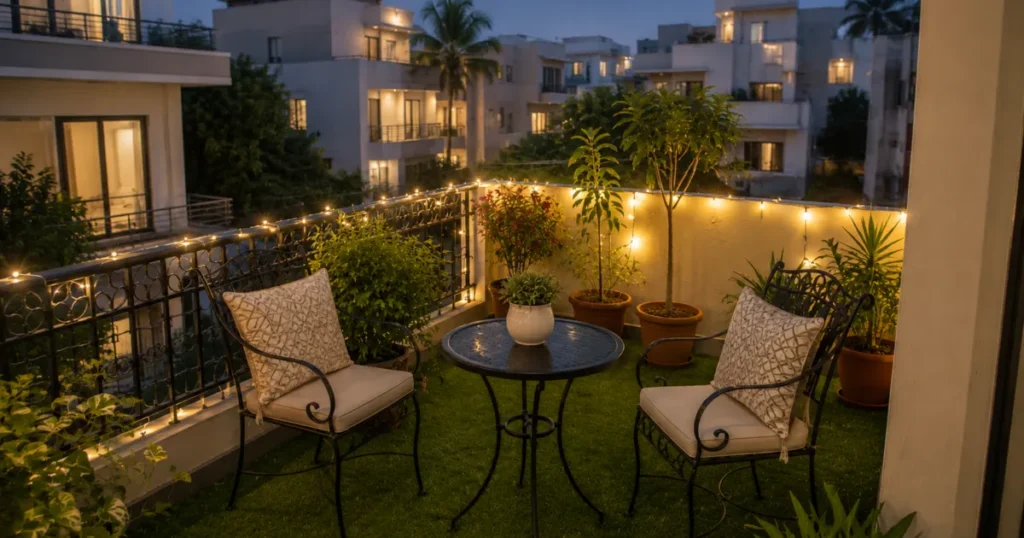
To set up a balcony layout, the green turf is cut precisely to match the dimensions of your floor. You can place outdoor chairs, small tables, or potted plants directly on top of the turf without damaging the synthetic backing. Many modern designs also include installing the turf vertically to create a custom artificial grass balcony wall, which provides an effective privacy screen from surrounding buildings and softens outdoor street noise.
Why sports turf is used for gym flooring?
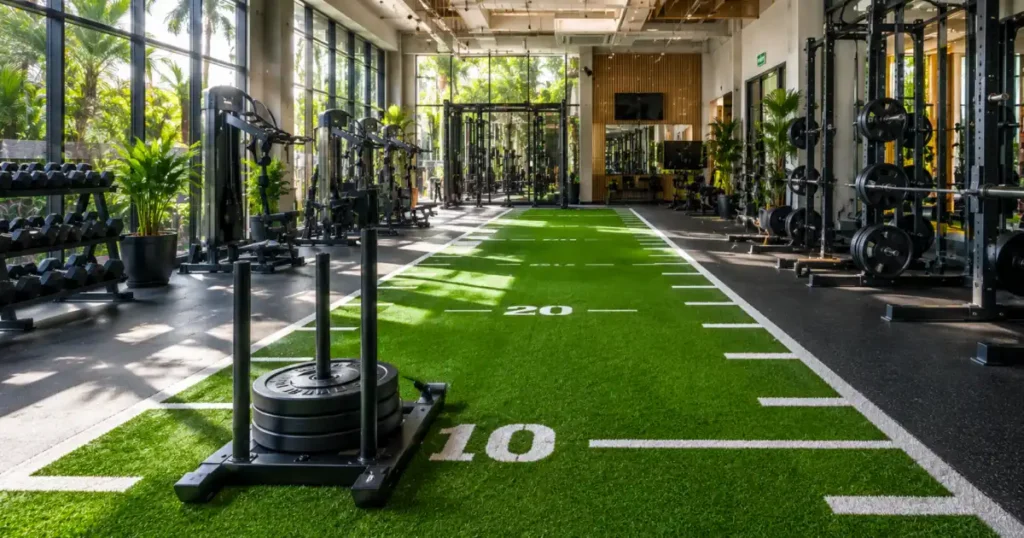
Athletic training spaces require a specific type of flooring that can handle high-impact movements and heavy weights. Heavy duty sports turf is designed with dense fibers and reinforced backing to handle the intense friction of running drills, sled pushing, and functional fitness routines.
The primary function of this flooring inside a fitness center is shock absorption. The cushioned surface protects the joints of athletes during high impact exercises and offers excellent grip to prevent slipping. Additionally, regular rubber or concrete floors can tear or crack when gym equipment is dragged across them, but a dedicated sports turf track protects the subfloor and reduces the noise of dropped weights.
How to choose the best artificial grass for your property?
Selecting the right material depends entirely on the foot traffic and functional requirements of your specific space. Finding the best artificial grass requires checking the technical specifications rather than just choosing by color:
- Check the pile height to ensure the grass blades are long enough for a luxurious look.
- For high traffic lawns, a medium height of thirty to thirty five millimeters is best because it stays upright easily.
- High quality turf feels heavy because it contains a large number of grass blades stitched closely together. Dense turf always looks more realistic and luxurious.
- Turn the grass sample over to inspect the back. A premium backing layer must feel strong and feature plenty of drainage holes to let water escape quickly.
- Finding the best artificial grass means picking a mix of different green shades and a few brown fibers at the bottom to look exactly like real nature.
Steps to install artificial grass perfectly without mistakes
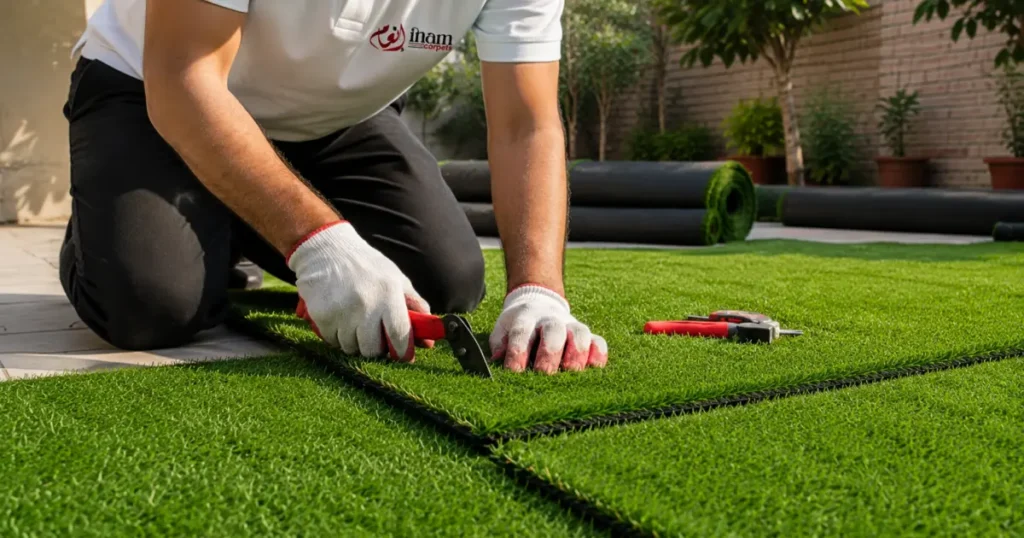
A proper installation process determines how long the synthetic lawn stays smooth and flat without shifting or wrinkling over time. To install artificial grass perfectly, the process follows these core steps:
- Ground preparation and clearing by removing all existing real grass, weeds, and the top layer of loose soil before applying a sturdy weed barrier fabric.
- Adding the stone base and leveling with a thick layer of crushed stone and fine gravel spread and compacted using heavy machinery to create a solid foundation.
- Laying and joining the turf rolls precisely to fit the shape of your walls, joining the seams securely using premium outdoor adhesive tape to make the joints invisible.
Cleaning and maintaining synthetic turf surfaces easily
Keeping a synthetic lawn clean is straightforward and does not require complex machinery or specialized chemical treatments. For routine cleaning, a plastic rake or a stiff brush should be used to sweep away loose leaves, dust, and debris while lifting the grass fibers back into an upright position.
If the surface comes into contact with mud, beverage spills, or pet waste, you can rinse the area directly with water from a garden hose. The drainage system allows the water to pass straight through the backing layer. For older or sticky spots, a simple mixture of household soap and warm water can be used to wash the fibers clean without altering the color of the turf.
Understanding the artificial grass price structure and costs
The initial artificial grass price is calculated based on the weight of the polymers used, the density of the stitches, and the durability of the backing material. Heavy duty varieties designed for athletic tracks or thick residential lawns cost more upfront because they utilize more raw materials during the manufacturing process.
While synthetic flooring requires a higher initial budget than planting real grass seeds, the upfront artificial grass price functions as a long term cost saving measure. Within a few years, the money saved by cutting out water bills, lawnmower fuel, fertilizers, weed control treatments, and professional gardening labor offsets the original installation expenses.
Selecting artificial grass and sports turf at Inam Carpets Rawalpindi Saddar
Choosing an experienced supplier ensures that you receive durable materials that match your specific flooring needs. Inam Carpets stocks a variety of high grade synthetic lawn options designed for residential, commercial, and athletic installations. You can visit our store located in Saddar Rawalpindi to examine different pile heights and density options available for your project.
Apart from serving clients across Rawalpindi and Islamabad, we offer reliable nationwide delivery to ensure your selected materials arrive directly at your location. Our product range includes turf with ultraviolet protection to prevent color degradation under hot sun conditions, with various specifications tailored for balconies, yards, office spaces, and commercial gyms. Contact Inam Carpets today to discuss your project requirements, view available samples, and receive an accurate price quote for your flooring space.